By Hunter Wilson — Lake Wylie Guru
Buying a waterfront home on Lake Wylie is one of the best decisions you can make. I know because I’ve lived on this lake my entire life. But after years of representing buyers on this shoreline, I’ve watched too many people make expensive mistakes — not because they weren’t smart, but because their agent simply didn’t know the lake.
Here are three things that separate a good Lake Wylie waterfront purchase from a costly one.
1. Sedimentation: The Silent Deal-Killer Most Agents Have Never Heard Of
I’ll be blunt — most real estate agents have no idea what sedimentation is. That’s a problem when you’re buying waterfront property on Lake Wylie.
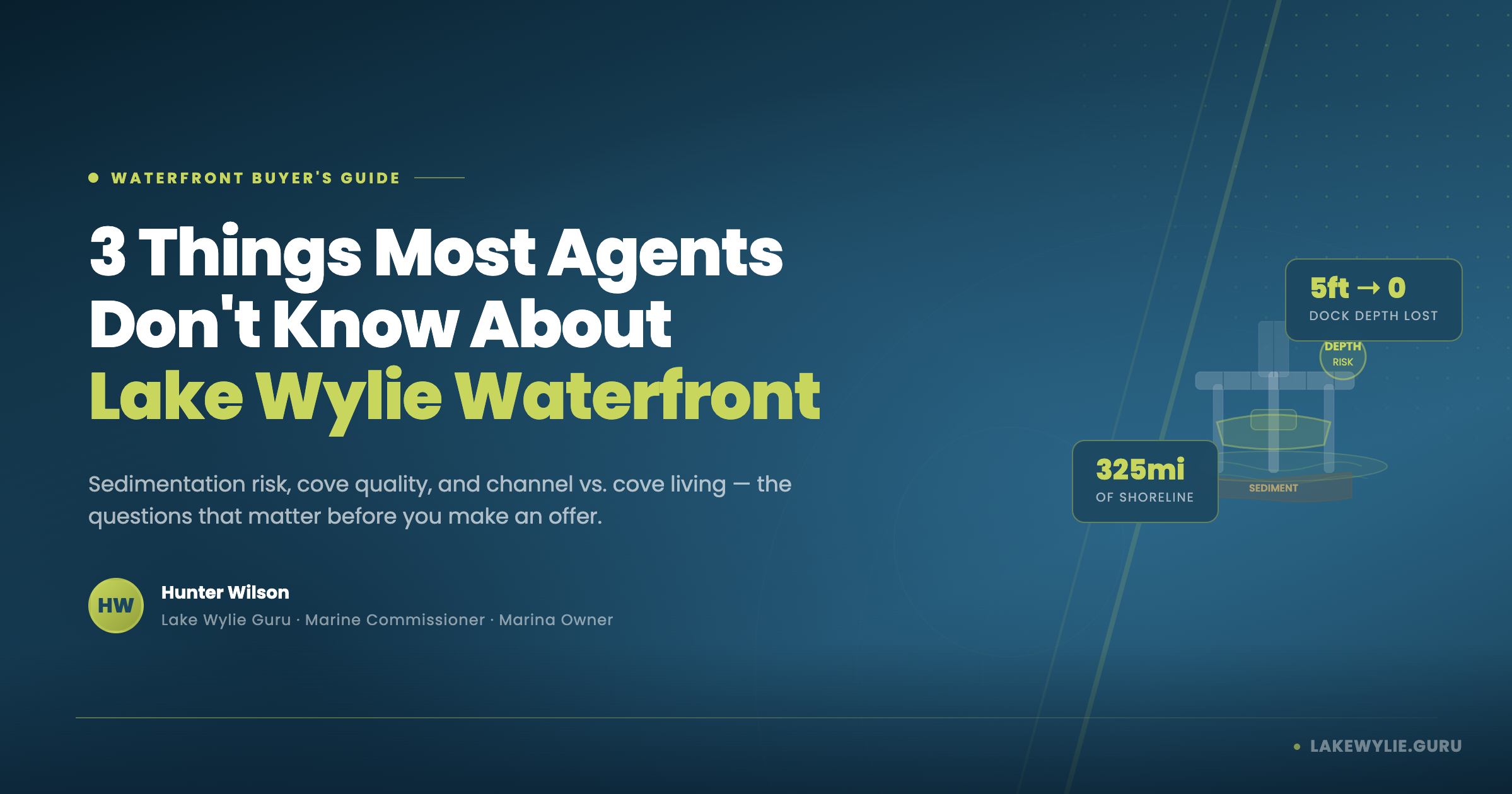
Sedimentation is the gradual buildup of sediment — essentially mud and fine particles — on the lake floor. Over time, this buildup raises the lake bed in certain areas, reducing the water depth at your dock. A property that shows 5 feet of water depth at the dock today could be sitting in 2 feet — or zero — within a decade, depending on where it sits on the lake.
Think about what that means practically. A shallow or silted dock can’t accommodate a boat. Dredging is expensive, complicated, and subject to Duke Energy permitting on Lake Wylie. What looked like a waterfront dream at closing becomes a waterfront problem at renewal.
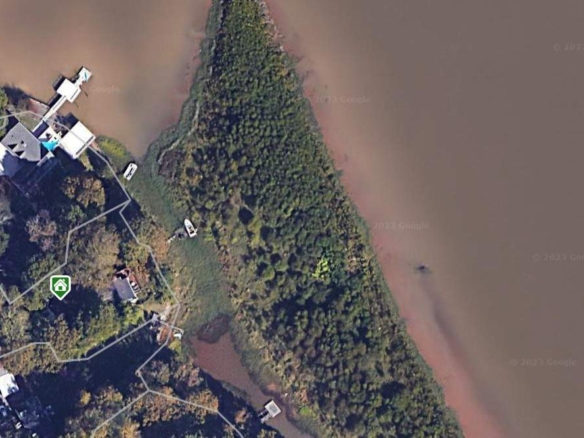
Certain areas of Lake Wylie are significantly more prone to sedimentation than others — particularly shallower coves with limited water flow and areas near tributaries and creek inlets where sediment washes in. Knowing which areas carry this risk isn’t something you can find on Zillow. It’s something you learn from spending decades on the water.
Before you make an offer on any Lake Wylie waterfront property, sedimentation risk should be part of your due diligence. I assess this on every waterfront transaction I represent.
2. Not All Coves Are Created Equal
“Waterfront is waterfront” — I’ve heard agents say this. It tells you everything you need to know about whether they actually live on the lake.
Lake Wylie has dozens of coves, and they are not the same. Some are quiet, protected, and perfect for families with young kids. Others have heavy boat traffic, wakes that pound your dock all weekend, or water quality issues from surrounding runoff. Some coves get afternoon shade when you want sun. Some have gorgeous protected views. Others look directly at a neighbor’s backyard 40 feet away.
What makes a cove “good” or “not so good” is also deeply personal. A retiree who wants peace and calm prioritizes completely different cove characteristics than a family that wants to be in the middle of the action. Someone who plans to paddleboard every morning wants different water conditions than someone who is buying purely for the view.
The only way to know the difference is to have been in those coves — not once on a showing, but hundreds of times across different seasons, different times of day, and different weather conditions. That’s the knowledge I bring to every buyer I work with.
3. Main Channel vs. Cove: Two Completely Different Lifestyles
This is the one that surprises buyers the most.
Living on the main channel of Lake Wylie and living in a cove are not just different views — they are fundamentally different ways of experiencing lake life. Most agents treat them as interchangeable. They’re not.
Main channel living means big water views, direct access to the full lake without navigating in and out of a cove, and a sense of openness that is genuinely spectacular. It also means boat traffic. On a busy summer weekend, the main channel sees consistent wake and activity from morning through evening. If you want the drama and energy of being on the water, the main channel delivers. If you have young children swimming off your dock or you simply want quiet, it can be a different story.
Cove living tends to be calmer, more private, and more insulated from traffic. Your dock sits in protected water. You often know your neighbors. The trade-off is that you’re navigating in and out every time you take the boat out, and depending on the cove, your big water views are more limited.
Neither is better. But they are different lifestyles, and the right answer depends entirely on who you are and how you plan to live on the lake. I always have this conversation with my buyers before we ever look at a single listing — because buying the wrong one is a mistake that’s hard and expensive to undo.
The Bottom Line
Lake Wylie waterfront is a unique and specialized market. The questions that matter most — sediment depth, cove characteristics, channel vs. cove lifestyle — don’t show up in any MLS listing. They come from experience.
I’ve lived on this lake my whole life. I’ve served as a Lake Wylie Marine Commissioner. I own Tailrace Marina and the largest boat rental operation on the lake. When I represent a waterfront buyer, I’m not just helping you find a house — I’m helping you find the right place on the water for your life.
If you’re considering buying waterfront on Lake Wylie, let’s talk before you start touring homes.